
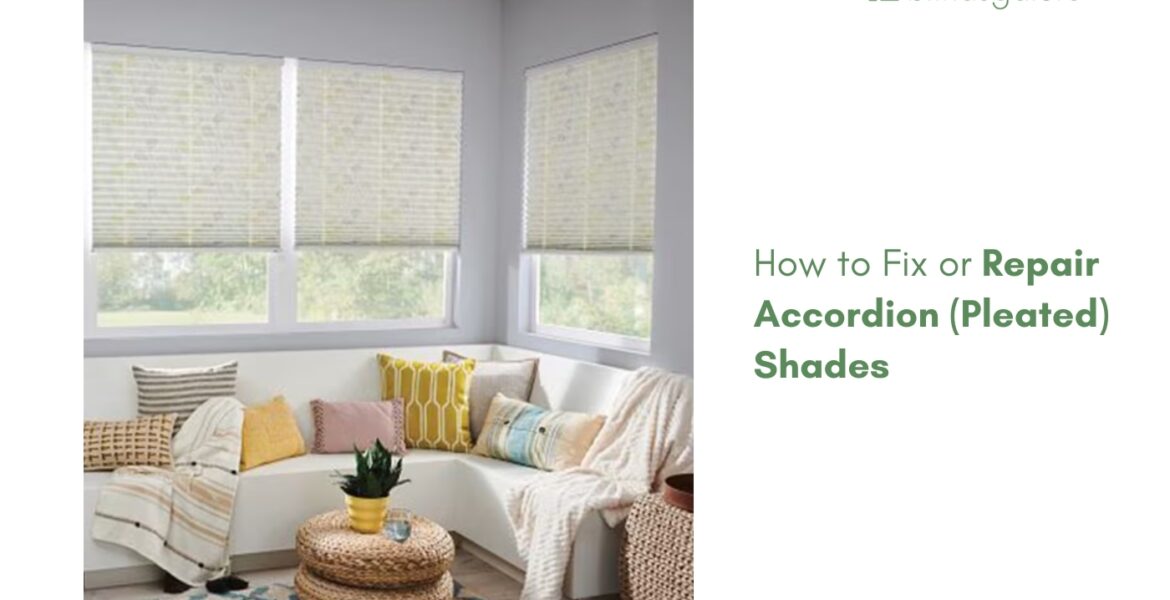
Pleated shades, sometimes called accordion shades, are simple by design. A single piece of fabric folded into crisp horizontal pleats, held in place by lift cords and a headrail mechanism. That simplicity is also why most common problems can be diagnosed and fixed at home with basic tools.
A shade that will not stay up, hangs unevenly, or makes noise during operation usually has a straightforward cause and a repair that takes 15 minutes or less.
Here is how to troubleshoot the most common pleated shade problems and when replacing is the smarter path.
What are the most common pleated shade problems?
Four issues account for the vast majority of pleated shade repairs. Each has a different root cause and a different fix.
The shade will not stay in position
When a pleated shade slides down after being raised, the cord lock mechanism inside the headrail is usually the cause. The cord lock uses a small internal roller or pin to grip the lift cords when the shade is released at an angle. Over time, this grip wears down, especially if the shade is locked in the same position every day.
The fix: try locking the shade at a slightly different height. Repeated locking in the same spot can crush the cord at that point. If the cord lock is worn out entirely, the mechanism may need to be replaced, and contacting the manufacturer for a replacement part is the most reliable route. For Blindsgalore products, the in-house experts at (877) 702-5463 can help identify the right part.
The bottom rail hangs unevenly
An uneven bottom rail usually means the lift cords on one side have different tension than the other. One cord may be stretched, tangled, or caught inside the headrail.
The fix: lower the shade fully and check that both lift cords have equal tension. If one side is slack, gently pull the cord on the loose side to even the tension. If the cords are visibly frayed or one has broken, the shade will need to be restrung, which involves threading new cord through the fabric holes from top to bottom.
The shade makes noise when operating
A squeaky or rattling shade usually means a small plastic separator inside the headrail has shifted out of position. The separator keeps the internal metal splines from rubbing against each other.
The fix: open the headrail end cap and push the plastic separator back into its original position at the end of the metal components. The noise should stop immediately once the parts are no longer in contact.
The fabric is torn, creased, or sagging
Fabric damage on a pleated shade is the one problem that does not have a DIY fix. A torn pleat, a permanent crease, or fabric that has lost its stiffness and sags means the material has reached the end of its useful life. Replacement fabric is not available separately for most pleated shades, so a new shade is the practical answer.
How to restring a pleated shade
Restringing is the most involved DIY repair and is worth attempting when the shade is in good condition, but the lift cord has frayed or snapped.
The restringing process step by step:
- Remove the shade from the brackets by tilting the headrail down and unsnapping it.
- Slide the bottom rail off the end of the fabric.
- Remove the old cord by pulling it out through the cord holes from the bottom up.
- Thread new cord of the same thickness down through each hole from top to bottom using a restringing needle or wire tool.
- Attach a plastic washer or knot at the bottom end of each cord to prevent the fabric from slipping off.
- Feed the cord through the cord lock in the headrail, reinstall the bottom rail, and snap the headrail back into the brackets.
The length of replacement cord should be roughly twice the height of the shade plus the full width, to account for the travel through the fabric and the headrail mechanism. Replacing all lift cords at the same time, even if only one is broken, ensures even tension and prevents a repeat repair.
When should you replace instead of repair?
Repair makes sense when the shade fabric is in good condition, and the issue is mechanical: a worn cord lock, frayed cord, or misaligned part. Replacement makes sense when the fabric is torn, permanently creased, discolored, or sagging, since no mechanical fix changes the look of damaged material.
Modern pleated shades come with cordless lift options that remove the cord-wear problem entirely, and they are custom-built to the exact window measurements for a precision fit that builder-grade shades rarely achieve. If the shade being repaired is an old, pre-cut size that never fit perfectly, replacing it with a custom treatment is the chance to get the fit right. For an upgrade beyond pleated, cellular shades add insulating honeycomb pockets that pleated shades lack, and the guide on Dual Sheer Shades covers treatments with flexible light control.
The Ultimate Guide to Window Treatments walks through every category if you are weighing a full upgrade, and the guide on How Long Do Custom Blinds Last covers what to expect from the investment. For new-home planning, the guide on Window Treatments for New Construction covers measuring and selecting treatments from scratch.
All Blindsgalore brand shades are 100% custom, handcrafted to order, and backed by a 3-year limited warranty upgradeable to five years. Order free samples to see the upgrade, and call (877) 702-5463 with any repair or replacement questions.
A worn cord lock mechanism inside the headrail is the most common cause. Try locking the shade at a slightly different height. If the cord lock is worn out, it may need to be replaced.
Lower the shade fully and check that the lift cords on both sides have equal tension. If one side is slack, gently pull the cord to even the tension. Frayed or broken cords require restringing.
Yes. Remove the shade, pull out the old cord, and thread new cord of the same thickness through each fabric hole using a restringing needle. Replace all cords at the same time for even tension.
Replace when the fabric is torn, permanently creased, discolored, or sagging. Mechanical issues like worn cords and locks are worth repairing, but fabric damage means the shade has reached the end of its life.
Cordless pleated shades eliminate the lift cord entirely, which removes the most common failure point (frayed or broken cords). The internal spring mechanism is more durable than traditional cord lift.
Blindsgalore brand pleated shades carry a 3-year limited warranty with a free upgrade to a 5-year warranty, covering defects in materials and workmanship when properly installed. Boutique products include a free 5-year extended warranty. Fading is not covered.