
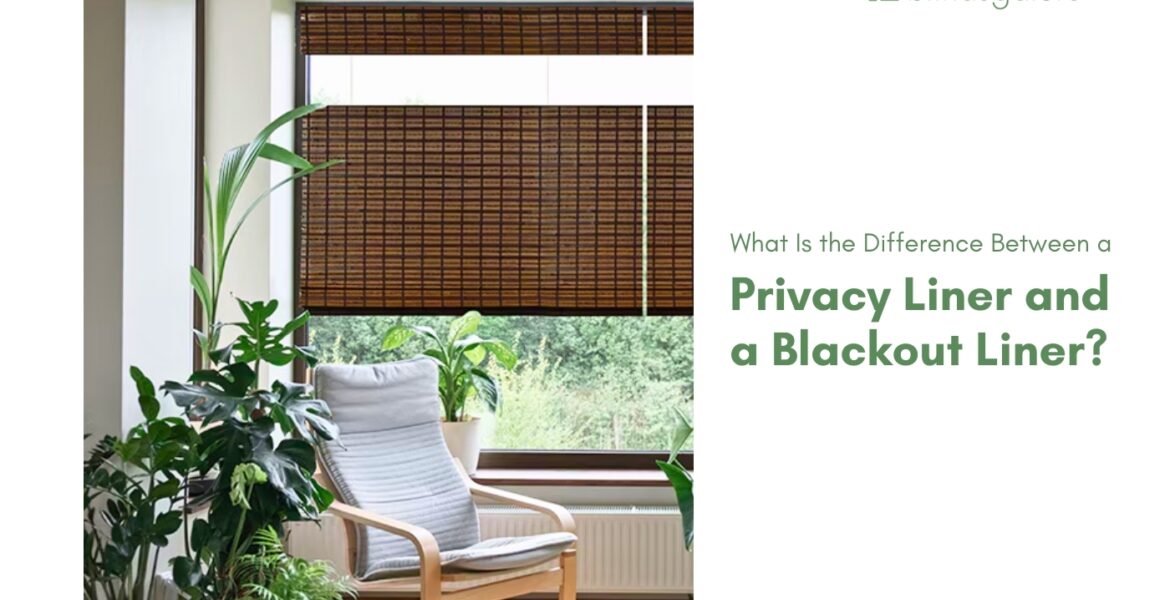
A privacy liner and a blackout liner both attach to the back of a window shade to improve light control and visibility from outside. The difference is how much they block. A privacy liner stops people from seeing in while still letting natural light filter through.
A blackout liner blocks close to 100% of the light entirely, creating near-total darkness. The right choice depends on the room and whether daylight or darkness is the priority.
What is a privacy liner?
A privacy liner is a lightweight fabric panel attached behind a window shade. The purpose is to prevent anyone outside from seeing into the room while still allowing soft, diffused daylight to pass through. The room stays bright and airy, but the view from outside is blocked.
Privacy liners are most commonly added to woven wood shades and roman shades, where the natural weave or fabric alone may not provide enough opacity on its own. Without a liner, a woven wood shade can be partially see-through, especially at night when interior lights are on. A privacy liner solves that without sacrificing the daylight that makes the shade beautiful in the first place.
The trade-off is that a privacy liner does not block light. Sunlight will still enter the room, which is the point for living rooms, dining rooms, kitchens, and any space where natural light matters during the day. For rooms that want light and privacy at the same time, a privacy liner is the right window shade liner option.
What is a blackout liner?
A blackout liner is a thicker, denser fabric panel designed to block close to 100% of incoming light. The material is typically opaque and multi-layered, with a coating or weave that stops light from passing through. When paired with the right shade and a well-planned mount, a blackout liner creates near-total darkness.
Blackout liners are the standard upgrade for bedrooms, nurseries, and media rooms. Adding one to a woven wood shade or Roman shade transforms a decorative treatment into a functional light-blocking one without changing the look from inside the room. The full blackout collection includes shades with built-in blackout fabric as well as options that pair with a separate blackout liner.
Beyond darkness, blackout liners also add insulation. The dense material creates an extra barrier between the window and the room, slowing heat transfer in both summer and winter. For rooms where both light control and energy efficiency matter, a blackout liner pulls double duty. The guide on Hello Sunshine, Goodbye Glare covers more ways to manage light and heat across different rooms.
How do they compare side by side?
The differences between a privacy liner vs blackout liner come down to three things: light, visibility, and weight.
A privacy liner allows soft daylight through while blocking the view from outside. A blackout liner blocks both daylight and the view entirely. A privacy liner is lightweight and adds minimal bulk to the shade. A blackout liner is heavier and can change how the shade hangs slightly, especially on larger windows. Both improve privacy, but a privacy liner maintains the room’s natural brightness while a blackout liner deliberately removes it.
One honest note: neither liner eliminates light gaps at the edges of the window. Even a blackout liner will let a thin halo of light slip through the sides and bottom if the shade is inside-mounted. An outside mount, where the shade extends past the frame onto the wall, seals those gaps far better. For anyone choosing a blackout liner with the goal of total darkness, planning the mount is just as important as choosing the liner.
Which rooms need which liner?
The room’s purpose makes this decision simple.
Rooms that suit a privacy liner
Living rooms, dining rooms, kitchens, home offices, and any space where natural daylight is a design asset. The privacy liner keeps the room bright and welcoming while stopping the view from outside. For shades that already offer some flexibility between sheer and opaque, the guide on Dual Sheer Shades explores treatments that layer different opacities in one shade.
Rooms that suit a blackout liner
Bedrooms, nurseries, guest rooms, and media rooms where darkness is the goal. Shift workers, light-sensitive sleepers, and rooms with early morning east-facing sun all benefit from a blackout liner. Cellular shades with built-in blackout fabric offer an alternative that combines insulation and light blocking without needing a separate liner.
Rooms that can go either way
A guest bedroom used occasionally might work with a privacy liner for everyday brightness and rely on a blackout-lined roller shade or cellular shade when overnight guests need darkness. Mixing liners across the same home is common and practical. For rooms that want the softest possible light, sheer shades offer a third option that filters sunlight without adding a liner at all. The guide on How Long Do Custom Blinds Last covers lifespan across different shade types and liners, which helps plan the investment. And for upkeep, the guide on How to Clean Honeycomb Blinds Without Removing covers simple care for lined and unlined shades alike.
How to choose the right liner for your shade
Liners are selected at the time of purchase and are built into the shade, so choosing correctly upfront matters. Retrofitting a liner onto an existing shade is sometimes possible but limited, which means the decision is worth thinking through before ordering.
Start with the room’s purpose. Does the room need to stay bright during the day? Privacy liner. Does the room need to go dark on demand? Blackout liner. For rooms that face east and get early morning sun, a blackout liner on a bedroom shade makes mornings far more comfortable. For rooms that face south or west and get strong afternoon light, a privacy liner keeps the room usable without shutting out daylight entirely. For homes that want both, a two-fabric or day-night shade combines a light-filtering layer with a blackout layer on the same headrail, which eliminates the need to choose one or the other. The Ultimate Guide to Window Treatments walks through how different opacity levels work across a whole home.
All Blindsgalore brand shades carry a 3-year limited warranty upgradeable to five years, covering defects in materials and workmanship when properly installed. Order free samples to see the fabric with and without a liner, and call the in-house experts at (877) 702-5463 for help matching the right liner to each room.
A privacy liner blocks the view from outside while still letting natural light filter through. A blackout liner blocks close to 100% of the light entirely, creating near-total darkness. Privacy liners suit daytime rooms, while blackout liners suit bedrooms and media rooms.
A blackout liner is the right choice for bedrooms, nurseries, and any room that needs darkness for sleep or screen use. A privacy liner is the right choice for living rooms, kitchens, and spaces where you want daylight and privacy at the same time.
Liners are most commonly available for woven wood shades and Roman shades. Roller shades and cellular shades often come with built-in light-filtering or blackout fabric instead. Liners are typically selected at the time of purchase and built into the shade.
A blackout liner blocks close to 100% of the light through the fabric, but small gaps at the sides and bottom of the shade can still let light in. An outside mount seals those edges and delivers the truest darkness.
Yes. Blackout liners use denser, multi-layered material, which adds weight to the shade. The added weight can change how the shade hangs on larger windows, so choosing a quality mounting system matters.
Blindsgalore brand shades carry a 3-year limited warranty with an upgrade to a 5-year warranty, covering defects in materials and workmanship when properly installed. Boutique products include a 5-year extended warranty. Fading is not covered.