
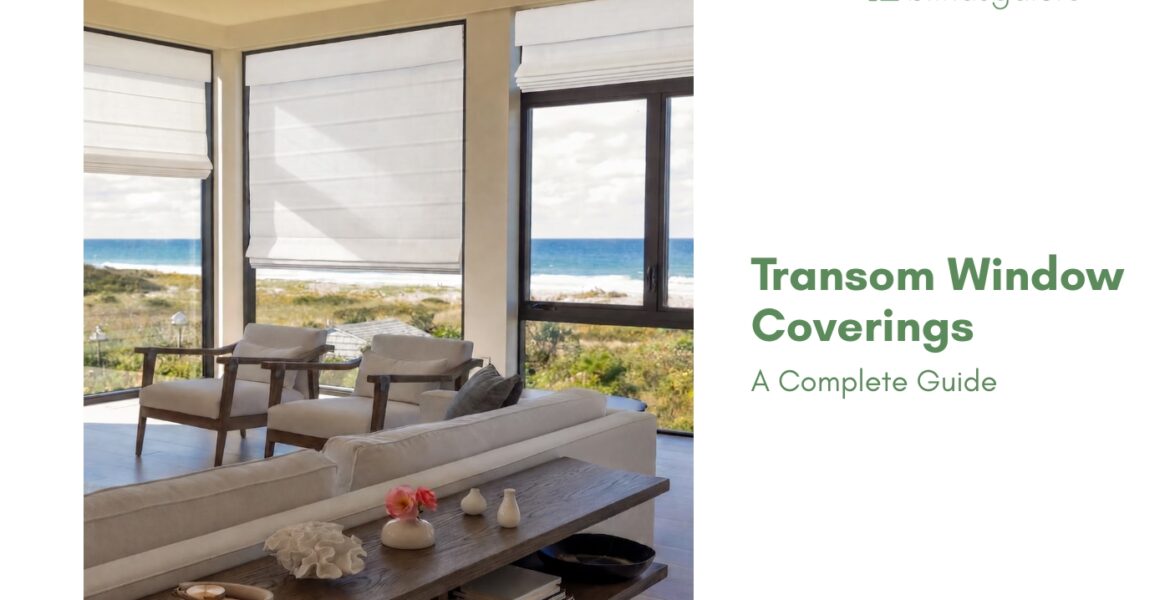
Transom windows are the small horizontal windows typically positioned above a door, a larger window, or a row of windows.
These unique horizontal windows are designed to let in extra natural light and add architectural character, but they also create a challenge: they are often hard to reach, oddly shaped, and difficult to cover with standard treatments. The best transom window coverings solve all three problems while preserving the light and style the windows were designed to bring in.
Why cover transom windows?
Many homeowners leave transom windows uncovered, and in some cases that is the right call. A transom above a front door that provides decorative light and architectural interest may not need covering at all. Covering becomes necessary when one of three conditions applies.
Glare is the first. A transom on a sun-facing wall can direct a beam of light into the room that creates harsh glare below, especially on screens and reflective surfaces. The guide on Hello Sunshine, Goodbye Glare covers how overhead and high-angle light creates specific challenges.
Privacy is the second. Ground-floor transom windows in homes near sidewalks, neighbors, or street traffic can allow sightlines into the room from elevated angles, even when the main windows below are covered.
Heat is the third. An uncovered transom adds to the total glass area that transfers heat, contributing to summer heat gain and winter heat loss. Covering the transom with an insulating treatment improves the room’s energy efficiency alongside whatever covers the windows below.
What are the best transom window coverings?
Three treatment types handle the unique demands of transom windows effectively.
Cellular shades
Cellular shades are the strongest all-around choice for transom windows. The honeycomb construction insulates the glass, the fabric options range from light-filtering to blackout, and the side channels available on some models hold the shade in place if the transom is at an angle. The window shades collection includes custom sizes that fit the narrow proportions of most transom openings.
Shutters and fixed louver panels
For a permanent, architectural finish, a small shutter panel or fixed louver insert gives the transom a built-in look that matches shutters on the windows below. Fixed panels work well when the transom light is consistent and no daily adjustment is needed. Custom sizing ensures the panel fits the exact opening.
Motorized shades
For transom windows that are high, hard to reach, or need daily adjustment, motorized shades provide the most practical solution. A remote control or smartphone app raises and lowers the shade without a ladder or extension pole. Smart-home integration through Alexa, Google Home, and other platforms allows scheduling the shade to open and close automatically. The guide on How to Schedule Your Motorized Blinds covers how daily automation routines work, and the guide on Motorized Shades and Blinds covers the broader landscape.
How to coordinate transom coverings with lower windows
The most common design mistake with transom window treatments is treating the transom as a separate project from the windows or doors below it. Visual cohesion matters.
Three coordination rules keep the window composition looking unified:
- Match the treatment type. If the windows below have cellular shades, cover the transom with a matching cellular shade in the same fabric and color. If the main windows have window blinds, a matching blind on the transom keeps the look unified.
Match the mount style. If the windows below are inside-mounted, inside-mount the transom covering too. Switching between inside and outside mount on adjacent windows creates a visual disconnect.
Match the color family. Even if the treatment types differ (a shade on the transom and blinds below, for example), keeping them in the same color family ties the window composition together. For how to plan treatments across multiple windows and room types, the Ultimate Guide to Window Treatments covers whole-home coordination.
How to operate hard-to-reach transoms
Reaching a transom window above a door or a tall window is the practical challenge that drives most covering decisions.
A manual shade with an extension pole is the simplest approach. A clip-on pole lets you push and pull the shade from the floor without a ladder. For transoms you adjust once or twice a day, a pole works well and costs nothing beyond the shade.
Motorized operation is the premium approach and the right one for very high transoms, multiple transom windows, or anyone who wants to automate based on time of day. Motorized shades pair with smart-home systems for voice control and scheduling, and they remove the need for any physical access to the window. For how long motorized treatments last, the guide on How Long Do Custom Blinds Last covers lifespan across treatment types.
Cover the transom, keep the character
The best transom window coverings preserve the architectural character and natural light while solving the practical problems of glare, privacy, and heat. Cellular shades, matched shutters, and motorized options all handle the narrow proportions and hard-to-reach placement that make transoms unique.
All Blindsgalore brand treatments are custom-built to your exact measurements and backed by a 3-year limited warranty upgradeable to five years. Order free samples to see the fabric against the transom, and call the in-house experts at (877) 702-5463 for help choosing and measuring.
Love your view.
Frequently asked questions
A transom window is a small horizontal window positioned above a door, a larger window, or a row of windows. Transom windows add natural light and architectural character to a room.
Not always. Covering is necessary when the transom causes glare, compromises privacy, or contributes to heat gain or loss. Decorative transoms in non-critical locations can often be left uncovered.
Cellular shades are the strongest all-around choice, offering insulation, light control, and custom sizing for narrow proportions. Motorized shades are ideal for hard-to-reach transoms.
Yes. Motorized shades operate by remote or smartphone app, which is the most practical option for high or hard-to-reach transom windows. Smart-home integration allows scheduling and voice control.
Yes. Matching the treatment type, mount style, and color family between the transom and the windows below creates visual cohesion. Mismatched treatments make the window composition look disjointed.
Blindsgalore brand treatments carry a 3-year limited warranty with a free upgrade to a 5-year warranty, covering defects in materials and workmanship when properly installed. Boutique products include a free 5-year extended warranty. Fading is not covered.