
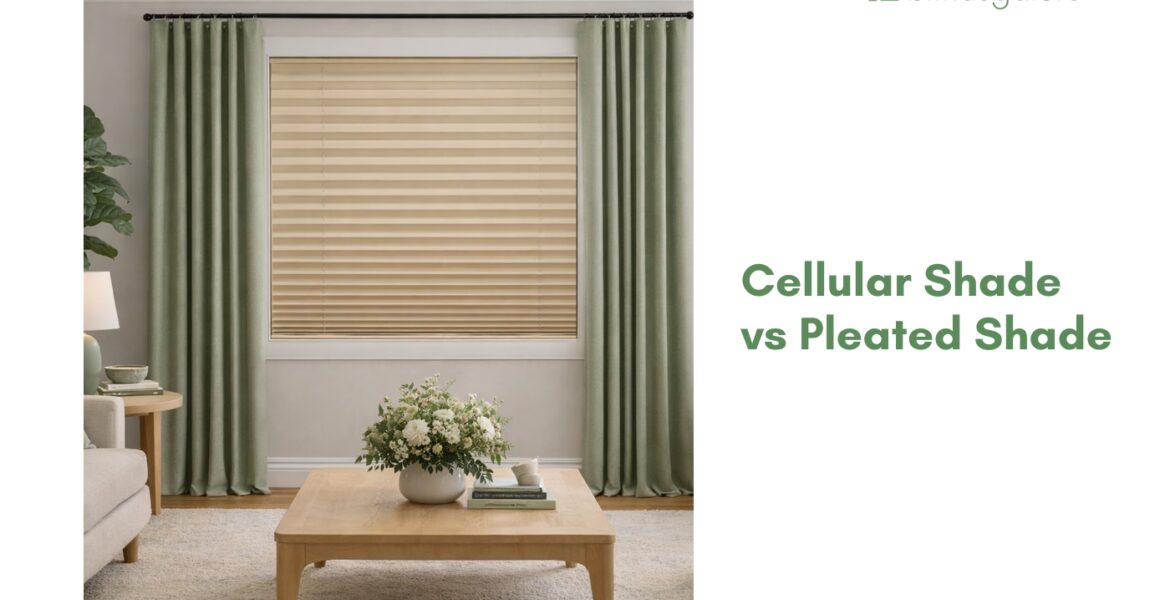
Cellular shades and pleated shades look almost identical from the front. Both fold into crisp horizontal pleats when lowered and compress into a neat stack when raised.
The difference is invisible until you look at the shade from the side, and that hidden difference changes everything about how each one insulates, blocks light, and affects the energy bill.
What is the difference between cellular and pleated shades?
The difference is the number of fabric layers and what they do with the air between them.
How cellular shades are built
Cellular shades, also called honeycomb shades, are made from two or more layers of fabric joined together to form hexagonal air pockets, the honeycomb cells visible from the side. Those cells trap a layer of still air between the fabric and the window, creating a thermal barrier that slows heat transfer in both directions. Single-cell designs use one row of pockets and suit most rooms well. Double-cell designs stack a second row on top of the first for stronger insulation, which makes a real difference in rooms with large windows or extreme seasonal temperatures. The cell size also varies, with smaller cells suiting smaller windows and larger cells looking more proportional on wide openings. The cellular shade collection covers both cell counts and all cell sizes in a full range of fabrics, from sheer to blackout.
How pleated shades are built
Pleated shades are made from a single layer of fabric folded into an accordion-style zigzag. From the front, the pleats look just like the pleats on a cellular shade. From the side, the difference is clear: there are no air pockets, no honeycomb structure, and no trapped air layer. Pleated shades offer a clean, lightweight finish at a lower price point, but they do not provide the insulating performance of a cellular shade. The guide on Hello Sunshine, Goodbye Glare covers how different shade constructions handle light and heat across rooms.
How does insulation compare?
Insulation is the single biggest difference between honeycomb shades vs pleated shades, and it drives the value equation.
Cellular shades are the most energy-efficient window treatment available. The trapped air inside the honeycomb pockets acts as a buffer against outdoor temperatures, slowing heat loss in winter and heat gain in summer. Double-cell construction increases that buffer. For rooms with large windows, drafty frames, or extreme seasonal temperatures, the insulating benefit is real and measurable. The Harmony light-filtering cellular shades combine that insulation with a soft, diffused glow in a wide palette of colors.
Pleated shades provide minimal insulation. The single fabric layer creates a small air gap when lowered, but without the sealed pockets of a honeycomb structure, the air moves freely, and the thermal benefit is limited. Adding a liner behind a pleated shade improves privacy and light control but still does not match the insulating performance of a honeycomb cell. For rooms where energy efficiency and temperature comfort matter, cellular shades have a decisive edge.
How does light control compare?
Both shade types offer light-filtering and room-darkening fabrics, but their construction affects how completely they block light.
Cellular shades run the operating cords inside the honeycomb cells, which means there are no visible cord holes in the fabric. The result is a cleaner light seal when closed, especially in blackout versions. The Classic cordless blackout cellular shades deliver near-total darkness with a cordless lift for a clean, cord-free finish.
Pleated shades have visible stitching or cord routes running through the single layer, which creates small points of light bleed even when the shade is fully closed. The light-filtering pleated shades soften daylight beautifully, but for rooms where true blackout matters, cellular is the stronger choice. The guide on Dual Sheer Shades explores another approach to flexible light control.
How does cost compare?
Pleated shades vs cellular shades cost is the area where pleated shades hold the advantage. The simpler single-layer construction costs less to produce, which translates to a lower price per window.
Cellular shades cost more upfront, but the energy savings, better light control, and longer-lasting pleat retention can balance the premium over the life of the shade. For budget-conscious projects where insulation is not a priority, pleated shades deliver a clean, attractive look at a lower spend. For rooms where comfort, temperature, and energy bills matter, cellular shades are the better long-term value. The guide on How Long Do Custom Blinds Last shows how lifespan factors into the cost equation.
Which rooms suit each shade?
The choice follows the room’s priorities.
Cellular shades belong in bedrooms, nurseries, home offices, and any room where insulation, sound absorption, and light control matter most. For rooms that want both privacy during the day and a view from the top of the window, the cordless top-down/bottom-up cellular shade lets the shade lower from the top for light while staying closed at the bottom for privacy. The guide on How to Clean Honeycomb Blinds Without Removing covers upkeep for the honeycomb pockets.
Pleated shades suit living rooms, guest rooms, and secondary spaces where a clean, lightweight finish matters and energy efficiency is less critical. The lower stack height when raised can also be an advantage on shorter windows where you want maximum glass exposed. Pleated shades also tend to offer a slightly wider range of colors and patterns, which gives more options for matching a specific room palette. For a broader look at how both types fit alongside other treatments, the Ultimate Guide to Window Treatments covers the full picture.
The shade that earns its place
Are cellular shades better than pleated? For insulation, energy efficiency, sound absorption, and blackout performance, yes. For budget, lightweight simplicity, and rooms where thermal performance is not a priority, pleated shades do the job well at a lower price. Both are custom-built to the exact measurements of the window and backed by a 3-year limited warranty upgradeable to five years.
Order free samples to see the pleat and the fabric side by side, and call the in-house experts at (877) 702-5463 to match the right shade to each room.
Frequently asked questions
Cellular shades use two or more fabric layers forming honeycomb air pockets that insulate the window. Pleated shades use a single folded layer with no air pockets. From the front, they look similar, but from the side, the construction difference is clear.
For insulation, energy efficiency, and blackout performance, cellular shades are the stronger choice. For budget-friendly coverage in rooms where thermal performance is less important, pleated shades work well.
Yes. Honeycomb shades and cellular shades are two names for the same product. The terms refer to the hexagonal air pockets visible from the side of the shade.
No. Pleated shades provide minimal insulation because they lack the air-trapping honeycomb pockets. Cellular shades are significantly more energy-efficient, especially in double-cell construction.
Yes. Pleated shades cost less per window because of the simpler single-layer construction. Cellular shades cost more upfront but offer better insulation, light control, and pleat retention over time.
Blindsgalore brand shades carry a 3-year limited warranty with an upgrade to a 5-year warranty, covering defects in materials and workmanship when properly installed. Boutique products include a 5-year extended warranty. Fading is not covered.