
When preparing to sell a home, most homeowners immediately think of kitchen renovations or bathroom overhauls. While those are valuable, they are also expensive and time-consuming. One of the most effective, yet often overlooked, ways to boost your property’s appeal is upgrading your window treatments.
The question isn’t just about aesthetics; it is about return on investment (ROI). Window treatments increase home value by bridging the gap between functional necessity and interior design. They signal to a buyer that the home is well-maintained, energy-efficient, and move-in ready.
Do Window Treatments Increase Home Value? (The Fixture vs. Decor Debate)
To understand ROI, you have to think like an appraiser. In the real estate world, there is a difference between “personal property” (things you take with you) and “fixtures” (things that stay).
While curtains are often seen as personal decor, hard window treatments are generally expected to stay with the house. If you are confused about the terminology, check out our guide on Shades vs. Blinds: What’s the Difference? Understanding this distinction is the first step in choosing upgrades that pay off.
Home Staging Window Treatments for Maximum Curb Appeal
Real estate agents will tell you that the sale often happens before the buyer even steps inside. Home staging window treatments are crucial for “curb appeal”, how your home looks from the street.
Uniformity is Key
You want all street-facing windows to have a consistent look (usually white backing).
Letting Light In
During an open house, you want rooms to feel airy. Learn how to style modern window curtains for your living room to frame the view rather than block it.
Polished Edges
If your windows look unfinished, consider adding a top treatment. A simple addition can hide hardware and add architectural interest. Read about the difference between a cornice and a valance to see which suits your home’s architecture.
For more inspiration on staging the most important room in the house, check out these 4 living room window treatment ideas.
Do Blinds Add Home Value? The Case for Shutters
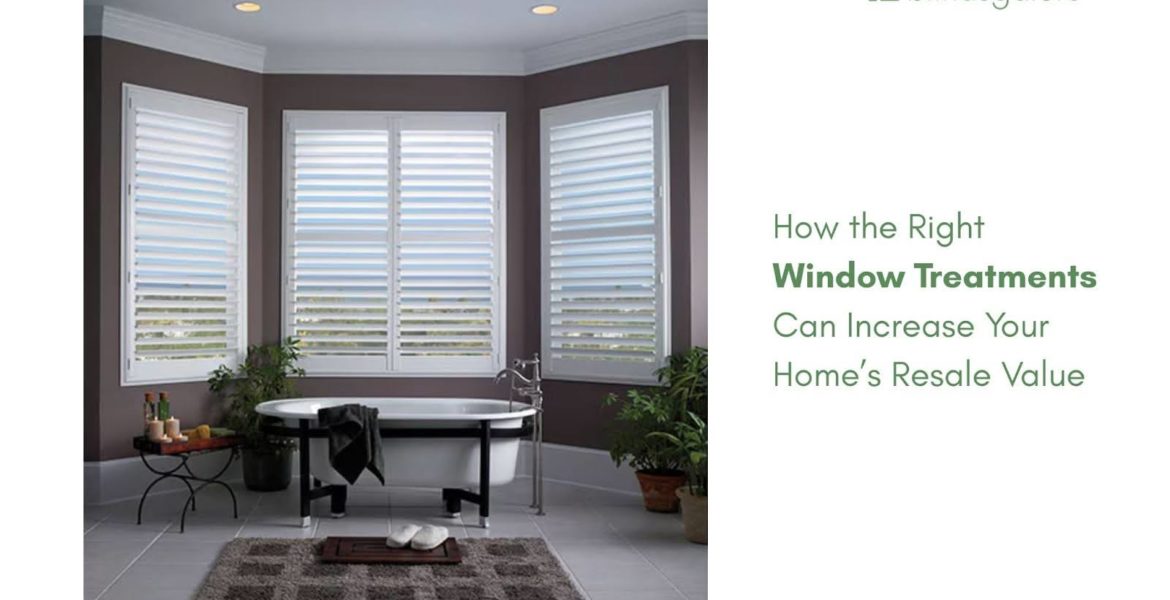
If you are looking for the single best window treatment for resale value, the answer is Plantation Shutters. Do blinds add home value? Standard aluminum ones might not, but shutters are custom-built for the window frame. They are often appraised as a permanent improvement, much like new flooring or cabinets.
Product Recommendation: Blindsgalore® Plantation Shutters
Why They Sell Homes
These are the gold standard for resale. Available in real wood or durable faux wood (perfect for humid areas), they offer a classic look that never goes out of style. Because they are physically attached to the frame, appraisers view them as a “fixture” rather than a temporary covering.
Window Coverings Resale Value: The Energy Efficiency Factor
Modern buyers are budget-conscious. They will ask about utility bills. If you can demonstrate that your home is energy efficient, you have a competitive edge. High-quality window coverings resale value comes from their R-value (insulation ability).
Cellular shades are excellent for this. However, don’t forget unique spaces. If you have a sunroom, it can be a major selling point or a major heating bill liability. See what to consider when choosing sunroom blinds to ensure that extra square footage is usable year-round.
Modernizing the Space: Motorization and Style
A “dated” home sits on the market longer. You can modernize a room instantly with the right treatment.
The Smart Home Advantage
Nothing says “luxury” like shades that move on their own. Motorized Products are a massive selling point for tech-savvy millennials and families with children (cordless safety!). Being able to tell a buyer, “These shades are voice-activated,” adds an immediate “wow” factor.
The Bedroom
Buyers want to know they will sleep well. If you are staging a bedroom, emphasize light control. You might even reference how to create a sleeping environment for a kind vampire (our guide to total blackouts).
The Look
Roman shades offer a soft, luxurious look that feels expensive. If you have shallow window frames, you can still achieve this look; just read our guide on outside mount roman shades.
The Style
Confused about which fold to choose? The Roman blinds vs. Roman shades debate is worth settling before you order to ensure the vibe matches your home’s era.
Solutions for Tricky Doors and Spaces
Nothing scares a buyer like a functional problem they have to solve. If you have “tricky” windows, solve the problem for them.
- Sliding Glass Doors: Don’t leave these bare. Learn how to install blinds on a sliding glass door to show buyers that privacy is possible.
- French Doors: The “clanking” of blinds against the glass is a turn-off. Use hold-down brackets. Our French door blinds comprehensive guide covers everything you need to know.
- Bathrooms: Moisture can ruin cheap blinds. Show buyers you’ve thought ahead by installing moisture-resistant options. Check our bathroom window treatment ideas.
Refresh vs. Replace: Getting Your Blinds Listing Ready
Sometimes you don’t need to buy new; you just need to maintain what you have.
- Clean them: Dust is a dealbreaker. Use our easy cleaning hacks for window blinds. If you have real wood, be careful not to warp them. Read how to clean wood blinds.
- Fix the Length: If your blinds are bunching at the bottom, it looks sloppy. Learn how to shorten blinds for a custom fit.
- Durability Check: If you have pets, your current blinds might have bite marks. Buyers will notice. Consider swapping them for cat-proof blinds if you plan to live there a while longer before selling.
If the blinds are broken or dangerous, take them down. A bare window is better than a broken blind. Here is how to take down blinds safely.
FAQs
A: Legally, yes. Blinds and shades that are mounted to the window frame are considered “fixtures” and must stay with the home unless you specifically exclude them in your sales contract. If you love them, specify it early!
A: For resale, neutral is king. While you might love a bright pattern, it’s safer to stick to white, cream, or gray “blank canvas” shades that let buyers picture their own decor. If you want color, add a valance that’s easy to remove.
A: Generally, custom window treatment warranties apply to the original purchaser. While the high-quality product adds value to the home, the warranty itself is a perk for you. Be transparent with buyers about the age and quality of the shades.
A: Perfect fit is essential for value. Custom blinds look expensive; ill-fitting ones look cheap. We have a detailed guide on blinds and shades for common window sizes and measuring tips.
A: Absolutely. Adding a valance is a cost-effective way to “dress up” a window and add a splash of color for photos without replacing the functioning blind underneath. Check out these valance window treatment ideas.
A: If you want to become an expert before investing, we have compiled everything you need to know in The Ultimate Guide to Window Treatments.